
This new bill in Congress would shield Big Oil from all climate liability nationwide
Oil-funded lawmakers aim to block all current and future state climate laws and accountability lawsuits in one fell swoop.
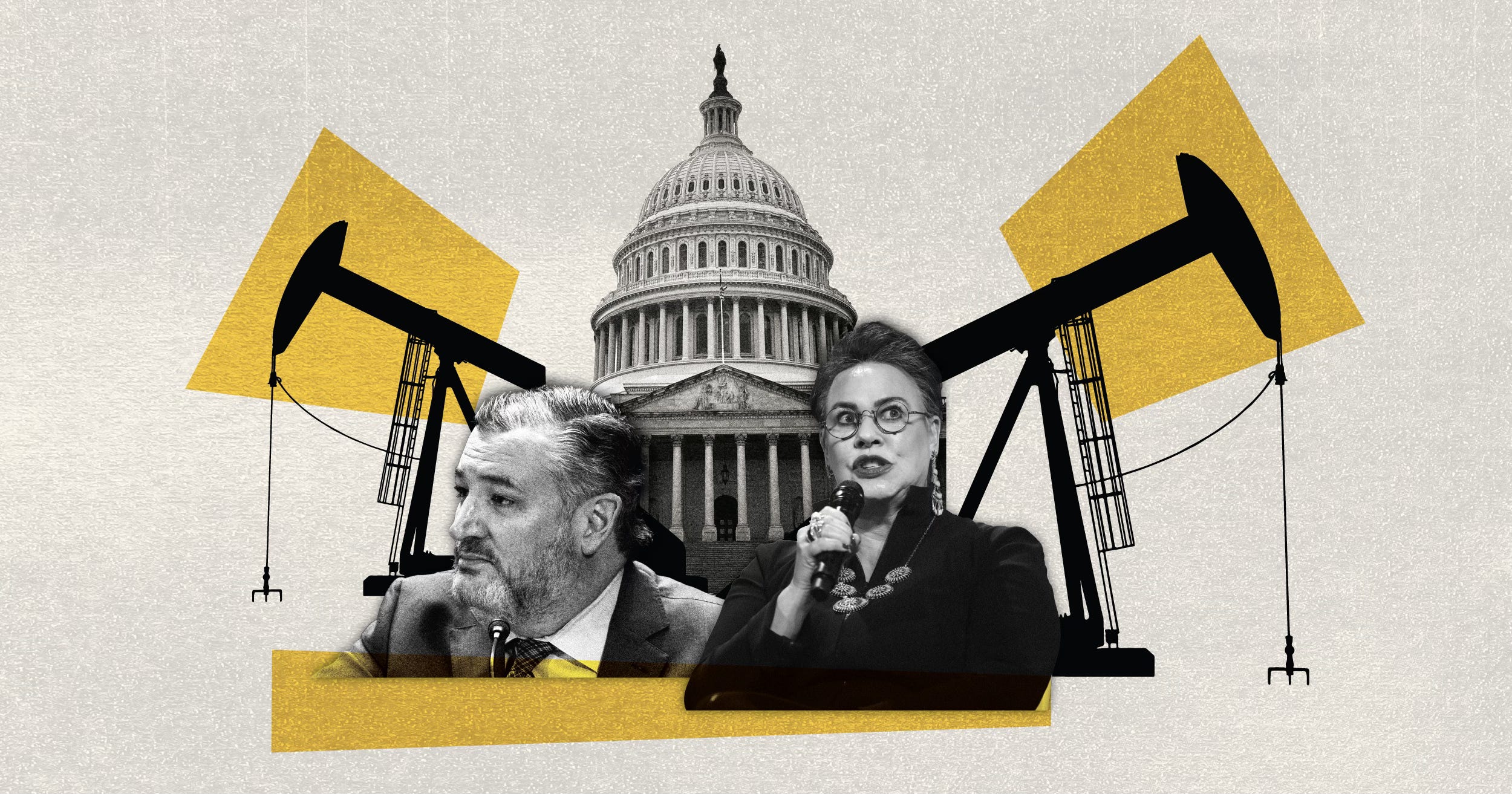
This article is being co-published with The Lever, an investigative newsroom. If you like this story, click here to get The Lever’s free newsletter.
As fossil fuel giants face mounting lawsuits for allegedly deceiving the public about the harm they knew their products would cause to the climate, Republican lawmakers just borrowed a tactic from gun lobbyists’ playbook, proposing sweeping federal immunity for oil and gas companies and limiting compensation for communities struggling with the local costs of climate disasters.
The effort could also block all state-level regulations of greenhouse gases, a sweeping deregulatory effort that some legal experts said was unconstitutional.
The GOP lawmakers behind the plan together received more than $9.5 million from the oil and gas industry over their careers. Their legislation would deliver one of the fossil fuel lobby’s top policy priorities and kill climate lawsuits before they can reach trial.
The new bill, the Stop Climate Shakedowns Act of 2026, introduced last week by Sen. Ted Cruz (R-Texas) and Rep. Harriet Hageman (R-Wyo.), would shield some of the world’s largest oil companies from laws and lawsuits that could make them pay billions of dollars in climate damages, nearly half a century after Exxon scientists first predicted the dangers of burning fossil fuels.
The legislation comes a little more than a year after oil and gas lobbyists first reportedly pressured Congress to grant their industry legal immunity. Gaining that legal shield has become an industry priority before the midterm elections.
In January, the American Petroleum Institute, the country’s largest oil and gas trade association, listed protecting oil companies from climate superfund laws and lawsuits as a top policy target in its 2026 agenda. The trade group has been directly lobbying Congress on the issue since at least last year.
In recent years, dozens of state, local, and tribal governments have brought lawsuits against major oil companies, including Exxon, Shell, Chevron, and BP. The suits point to growing evidence that the companies deceived the public about the “potentially catastrophic events” their products would cause and argue that they should help pay for the damages. Some states have also introduced climate superfund bills that would require oil companies to contribute to the costs of climate adaptation and recovery, akin to the federal Superfund program that makes polluters pay to clean up their environmental pollution. Vermont and New York have passed such bills into law.
The Stop Climate Shakedowns Act would make those efforts moot by dismissing pending climate accountability lawsuits, voiding climate superfund laws, and preventing any new laws or lawsuits from imposing climate liability on fossil fuel companies in the future.
According to a press release from Hageman, the legislation would protect fossil fuel operations from “leftist legal crusades” that she claims threaten energy affordability.
“Energy security is national security, and we will not self-sabotage our critical industries with a cascade of costly lawsuits and extreme penalties that jeopardize American drilling,” she said.
The other major industry to secure sweeping legal immunity from Congress was gun manufacturers, which two decades ago largely stripped gun violence victims of their ability to access the courts, thanks to the Protection of Lawful Commerce in Arms Act. Legal protections for the oil industry would similarly leave little recourse for communities competing for dwindling resources amid spiraling climate costs, say some legal experts and advocates.
The federal legislation comes as a growing number of Republican lawmakers are advancing state bills to block climate liability for fossil fuel companies and other greenhouse-gas polluters. Utah was the first state to pass its bill into law in March, followed by Tennessee and Oklahoma. Another bill in Iowa is awaiting the governor’s signature. Similar legislation was introduced in Louisiana, although its sponsor has since said the bill would need to be revised for clarity.
While it is unlikely that the federal liability shield would garner the 60 Senate votes needed to pass, a similar provision could be added to must-pass legislation in the future. The effort signals the fossil fuel industry’s increasing desperation to keep the lawsuits it is facing out of trial, said Pat Parenteau, a professor of environmental law and senior fellow for climate policy at Vermont Law and Graduate School.
“If there is no basis for the claims, why is immunity necessary?” he said.
“A Blank Check For Oil Companies To Lie”
State and local officials have brought climate lawsuits under state common law and consumer fraud statutes, modeling them after cases that forced tobacco and opioid companies to pay billions of dollars and change their advertising practices.
If the federal immunity legislation passes, said Richard Wallsgrove, an associate professor and director of the environmental law clinic at the William S. Richardson School of Law at the University of Hawai‘i at Mānoa, it would be a “slap in the face for people who are suffering from climate change, to say that they don’t even get a day in court.”
A lawsuit brought last year by Hawai‘i Attorney General Anne Lopez, for example, aims to recover the costs of local climate-fueled disasters across the state, which last month experienced massive flooding that required hundreds of rescues and cost at least $1 billion in damages. Hawai‘i’s case also seeks to make the oil and gas companies disgorge any profits they made through deceptive conduct in violation of state consumer protection law and cease any deceptive conduct going forward.
Maui, which in 2023 suffered one of the deadliest wildfires in U.S. history, and Honolulu have their own lawsuits against the oil companies — those suits are now moving toward trial.
Those cases against oil companies would be dismissed if Hageman and Cruz’s bill were to pass. The federal bill prohibits any “relief for alleged past or future harm resulting directly or indirectly from climate change, including because of marketing, alleged misrepresentation, alleged failure to warn, or any other speech.” It claims that efforts to impose such liability would “threaten to destabilize entire industries that are lawfully engaging in commerce in the United States.”
Yet “our entire economic system depends on us holding companies accountable if they deceive consumers,” said Wallsgrove. Many of the lawsuits argue that oil companies’ deception about their products not only delayed action to address the climate crisis, but skewed the energy market in favor of fossil fuels.
Even if it can be proven in a court of law that oil companies deceived consumers and the public in violation of “laws that apply to every other industry, [the bill] would say oil companies get off scot-free,” Wallsgrove said. “It’s a blank check for oil companies to lie as much as they want.”
Some climate accountability lawsuits rely more heavily on climate attribution science, which can link extreme weather events like floods, hurricanes, wildfires, droughts, and heat waves to climate change and greenhouse gas emissions from specific companies. That field is growing, but the new federal bill claims it “lack[s] scientific credibility.”
Such language attempts to “legislate scientific findings out of existence,” said Delta Merner, lead scientist and associate director of the climate accountability campaign at the Union of Concerned Scientists, a nonprofit that supports the state climate lawsuits.
Regardless of the industry’s efforts, “Hawai‘i and other states and localities across the country will continue to pursue legal avenues to hold fossil fuel companies accountable for their deceptive marketing in misrepresenting the extent of the fossil fuel industry’s role in climate-related harms, and we remain committed to using every legal tool available to protect our communities and environment,” Hawai‘i’s Department of the Attorney General wrote in an emailed statement.
The Oil Money Behind The Bill
The lawmakers backing immunity for oil and gas companies have received significant donations from the industry. Hageman’s bill was cosponsored by Reps. Pete Stauber (R-Minn.), Dan Crenshaw (R-Texas), Paul Gosar (R-Ariz.), Barry Moore (R-Ala.), and Mike Collins (R-Ga.). Together with Hageman, these congressmen received at least $1.8 million in total campaign donations from the oil and gas industry over their careers.
Cruz’s companion bill in the Senate was cosponsored by Sens. Tom Cotton (R-Ariz), Mike Lee (R-Utah), and Ted Budd (R-N.C.). Along with Cruz, who was the top beneficiary of oil and gas industry campaign donations between 2023 and 2024, the senators have received more than $7.6 million throughout their careers.
In a statement on Monday, Cruz railed against “radical environmental groups” for “using meritless lawsuits to bankrupt our energy industry, kill good paying jobs, and drive up the cost of electricity and gasoline for hardworking families.” At a congressional hearing last year on “The Left’s Lawfare Against American Energy Dominance,” he claimed without evidence that China was funding the climate lawsuits brought by U.S. communities.
Notably, Hageman and Cruz’s bill defines protected energy as “crude oil, natural gas, lease condensates, natural gas liquids, refined petroleum products, or coal,” with no mention of renewable energy sources like solar and wind.
The two lawmakers previously told E&E News that they “hadn’t heard from” oil industry groups on the legislation. But those same groups were quoted in Hageman’s press release on the new bill.
“We thank Senator Cruz and Rep. Hageman for introducing legislation to stop a growing patchwork of state laws and lawsuits that threaten American energy and risk raising costs for consumers,” said American Fuel & Petrochemical Manufacturers President and CEO Chet Thompson and American Petroleum Institute President and CEO Mike Sommers in a joint statement.
Hageman and Cruz’s offices did not respond to a request for comment on whether they were in contact with the groups about the bill.
The bill would provide a climate liability shield not only to companies but also to individuals, partnerships, government entities, and trade associations accused of climate deception. That includes the American Petroleum Institute, a trade association that is a defendant in several of the climate lawsuits.
Hageman and Cruz’s legislation is also backed by a group of Republican attorneys general, who in June asked then-U.S. Attorney General Pam Bondi to recommend Congress provide a “liability shield” for oil companies, citing firearm manufacturers’ gun-violence immunity as an example. The attorneys general are all members of the Republican Attorneys General Association, a political advocacy group that has received funding from several fossil fuel defendants in the climate lawsuits, including Exxon, Koch Industries, and the American Petroleum Institute, as recently as 2024.
Trump, Leonard Leo, And Constitutional Questions
The constellation of players working to kill liability efforts against the oil industry also includes the Trump administration and right-wing judicial activists like Leonard Leo, known as the architect of the Supreme Court’s current conservative supermajority.
Most of the Republican state bills blocking climate laws and lawsuits have been part of a coordinated effort by groups tied to Leo’s dark money political network, according to a recent ProPublica investigation. Leo-linked groups have also been top funders of the Republican Attorneys General Association.
After promising the oil industry favors in exchange for campaign donations, Trump directed his Department of Justice to stop state climate laws and lawsuits. Federal prosecutors tried to deliver, filing preemptive lawsuits against Michigan and Hawai‘i state officials to stop them from suing oil companies. Both states brought their climate cases anyway, and the Justice Department’s lawsuits have been dismissed by federal judges.
The Trump administration has also sued to block New York and Vermont’s climate superfund laws, and those cases are pending in federal court.
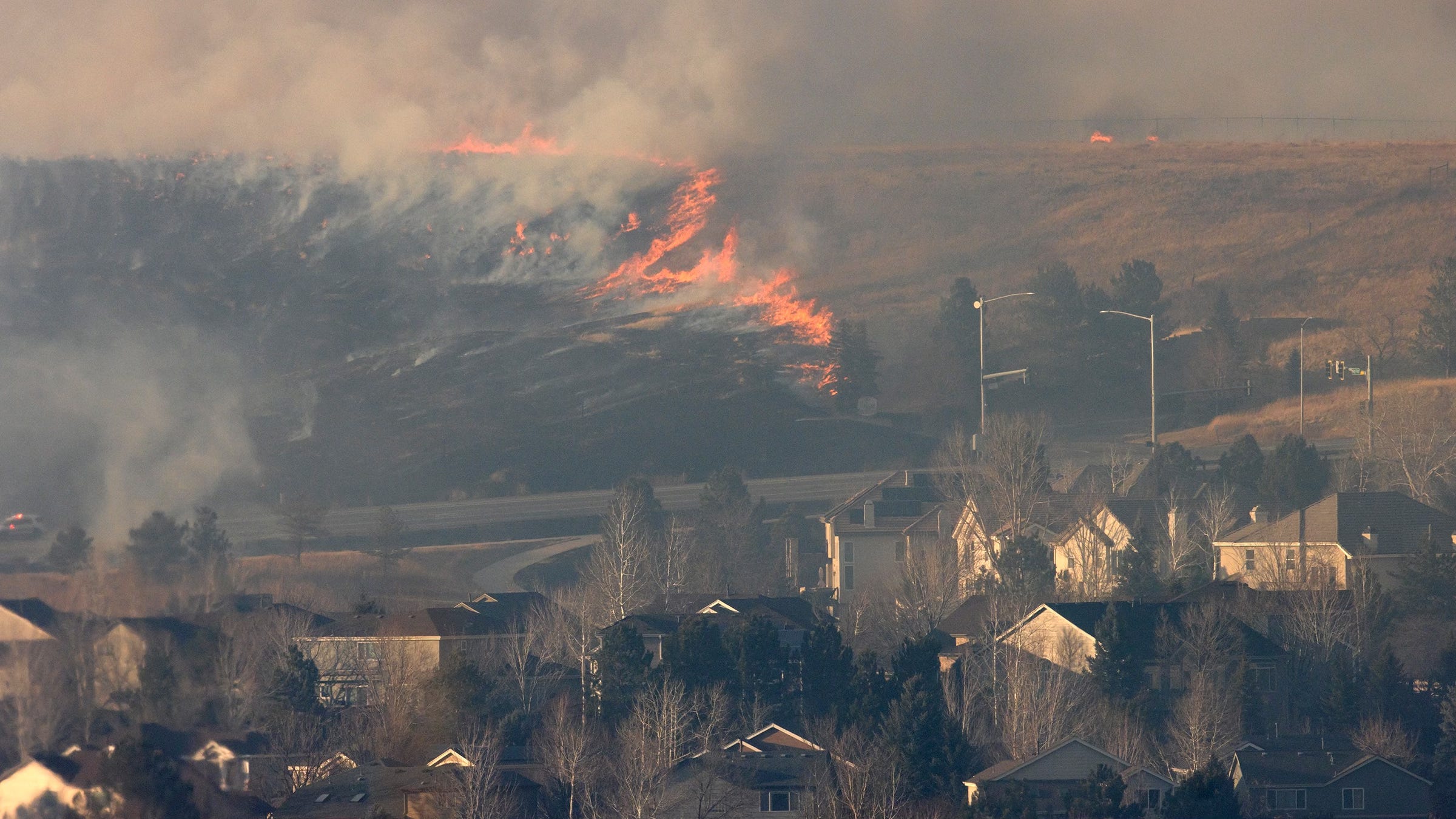
Climate accountability lawsuits face another challenge: A petition by oil companies to throw out a case brought by Boulder, Colorado, is currently being considered by the Supreme Court. Backed by both the Trump administration and Leo-tied groups, the petition argues that such state and local lawsuits are preempted by the federal Clean Air Act and by “our constitutional structure.” Justice Samuel Alito, who owns thousands of dollars in stock in oil companies, took part in the decision to hear the case.
The new federal climate immunity bill appears to back that argument in a section on “federal preemption,” which would go even further to prevent any state-level regulation of greenhouse gases and climate change. According to Parenteau at Vermont Law and Graduate School, the measure is “an unconstitutional assertion of authority Congress does not possess.”
The section states that “The regulation of greenhouse gas emissions and climate change is and continues to be governed exclusively by Federal law and regulated by Federal agencies with authority delegated to those Federal agencies by Congress.” That provision is “stunningly broad and could be used to attack a broad swath of state climate laws,” said Michael Gerrard, director of the Sabin Center for Climate Change Law at Columbia University, in an email.
“Since 1970, the Clean Air Act has clearly allowed states to regulate air pollution from stationary sources more stringently than the EPA; this would break with a statutory rule that has been accepted for more than half a century,” he added.
However, that language could be rendered meaningless if the Trump administration succeeds in its plan to overturn the basis of the Clean Air Act.
Ultimately, even if the federal climate liability shield were to pass, the law could face constitutional challenges for invading state sovereignty and the constitutional separation-of-powers doctrine, said Wallsgrove at the University of Hawai‘i. He wonders what that says about legislative deference to fossil fuel interests.
“To do this just so your political donors in the oil industry don’t have to worry about these lawsuits seems like a troubling reason to abandon constitutional principles,” he said.
Editor’s note: ExxonKnews is a reporting project of the Center for Climate Integrity (CCI), an advocacy and watchdog group that provides research and tools to help communities hold oil and gas corporations accountable. CCI’s political staff are opposing immunity for the fossil fuel industry, but had no role in producing this story.
Are the legislators also immune? Can a constituent sue them for (example) wrongful death? They are complicit in my opinion and therefore we should be able to sue them.