
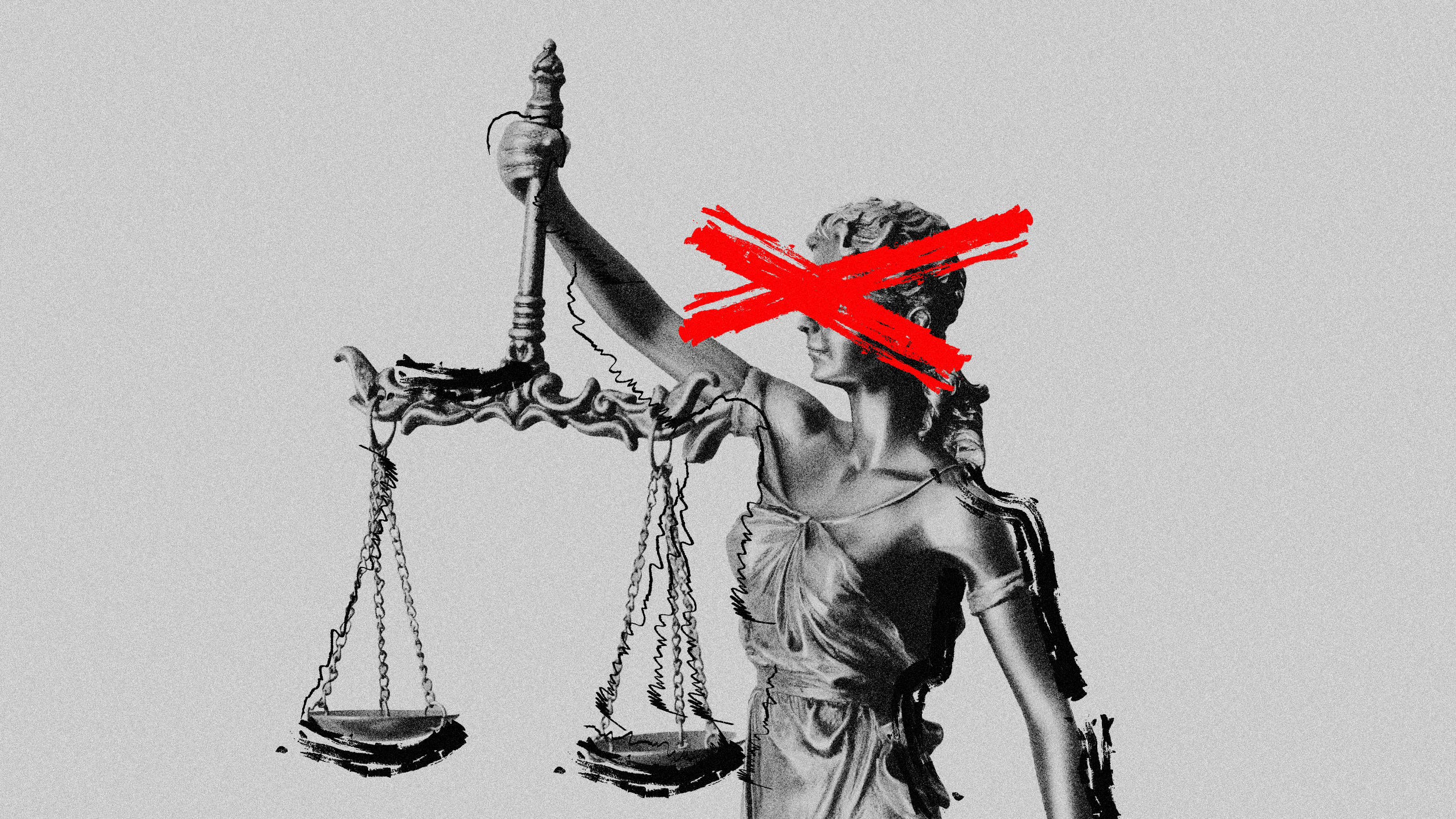
Earlier this month, after a group of 27 Republican attorneys general objected to a new climate chapter in a scientific reference manual for judges, the federal agency responsible for publishing it decided to remove the chapter entirely.
The decision came as oil and gas companies face a growing number of lawsuits accusing them of deceiving the public about climate change, which could result in billions of dollars in liability for the industry. Without the chapter, federal judges ruling on those and other cases will have no official guidance on how to evaluate climate attribution science, which is used to link extreme weather events to climate change and greenhouse gas emissions to specific polluters.
That wasn’t the only attack on climate lawsuits to make the news last week: a U.S. House representative announced that she’s drafting legislation to shield oil companies from such cases entirely. Rep. Harriet Hageman (R-WY) told E&E that her legislation will serve as “a form of preemption” to stop climate lawsuits.
Hageman’s comments echo a June letter from 16 Republican state attorneys general urging the Department of Justice to “recommend legislation” to Congress to block such cases, including through “federal preemption” and a “liability shield” that could give the companies legal immunity from them.
What do these efforts have in common? The officials that pushed them forward are all members of the Republican Attorneys General Association (RAGA), a group that receives massive amounts of money from some of the same fossil fuel industry players facing lawsuits over their role in destroying the planet.
“RAGA has been in bed with the carbon industry for years, and many of its state AGs have close ties to those industries,” said Lisa Graves, a former Justice Department official and now executive of True North Research, a national investigative watchdog group.
Under the mantle of “defending the rule of law” and “protect[ing] … opportunity for future generations,” RAGA is now playing a central role in oil industry donors’ escalating efforts to defeat climate lawsuits through the courts and Congress.
Censoring the science
The Federal Judicial Center — the agency tasked with helping courts understand complex issues that come before them on the bench — removed the climate chapter explicitly in response to the Republican attorneys general request. “Republican AGs FOUGHT and WON,” RAGA wrote in a celebratory X post lauding the decision to remove “ridiculous WOKE climate science from judicial manuals.”
The incident reflects a dramatically increasing influence of well-funded political interests on the judiciary, said two former judges.
Retired judge Shira Scheindlin, who served on the federal bench in New York for 22 years, said she was “kind of shocked” to see the chapter pulled after what “seems like inappropriate political pressure on the judicial branch.” Throughout her years as a judge, the peer-reviewed reference manual was used regularly by federal judges and their clerks “for any scientific type question.” The booklet helps judges understand complex issues emerging in courtrooms, including AI, forensics, and epidemiology. Scheindlin said she had seen chapters updated, but never removed entirely.
“There is no comparable example of how judges have been prevented from receiving information on important issues in society that are being brought into court,” said former Hawai‘i Supreme Court Justice Michael Wilson, who served on the state’s highest court for a decade. “This is a tragic but important insight into a serious erosion of judicial independence.”
So who exactly is funding RAGA, which helps Republican candidates for attorney general with their election and reelection campaigns, in the first place?
In 2024, the group received $125k from ExxonMobil; $250k from the American Petroleum Institute; and $250k from Koch Industries, all of whom are defendants in climate lawsuits, according to tax filings. Its top contributors have long been groups linked to conservative activist Leonard Leo, who is known for hand-picking justices on the current Supreme Court. Leo co-chairs the Federalist Society, a legal advocacy organization that has also received major funding from Koch Industries.
That could help explain the group’s crusade to paint scientific consensus on climate change as an effort to sway judges.
In his letter to the Federal Judicial Center, lead signatory West Virginia Attorney General John McCuskey and 26 other Republican attorneys general — all members of RAGA — accuse the authors of bias and argue that the chapter places the courts “firmly on one side of some of the most hotly disputed questions in current litigation: climate-related science and ‘attribution.’” Attribution science is being cited in climate lawsuits more frequently after years of industry efforts to suppress it.
Without the chapter, federal judges will now be reliant on lawyers and experts on both sides of an argument to explain climate science to the court, Scheindlin said.
The effort was part of a larger play to keep climate science education away from the judiciary. Just before the agency rescinded the chapter, the attorneys general asked Republican members of Congress to add the Federal Judicial Center to an existing investigation into the Environmental Law Institute (ELI), a nonprofit that works to educate lawyers and judges on climate issues. ELI was also a target of attacks by a Leonard Leo-linked group that charged it with influencing the courts with “questionable climate science.”
RAGA did not respond to a request for comment.
Shielding the fossil fuel industry
RAGA’s donors began planting seeds with the group — specifically, with West Virginia’s highest legal official — to shield the industry from climate action years ago. According to a 2012 tax filing obtained by Graves and reviewed by ExxonKnews, the Judicial Education Project (JEP), a dark money group tied to Leo, “conducted research into statutory and constitutional authority of the West Virginia Attorney General to sue the federal government, particularly in the context of EPA regulations.”
In 2015, West Virginia’s then-attorney general Patrick Morrisey sued the EPA to limit its ability to regulate emissions from power plants. Backed by other RAGA members, the case ultimately went before the Supreme Court, which ruled in their favor.
Today, the group’s donors have their sights set on climate deception lawsuits. In a policy agenda published in January, the American Petroleum Institute, a major RAGA funder, listed “protect[ing]” oil companies from “abusive state climate lawsuits” as a top priority.
West Virginia’s current attorney general, McCuskey, has followed suit. “Congress needs to step up, because the biggest problem that we have is that our national energy policy is being dictated in district courts,” he said during a Federalist Society panel last year. McCuskey co-led the letter to the Justice Department calling for a liability waiver.
Those calls are now being answered. At a hearing last week, Rep. Hageman announced that she was working with House and Senate colleagues to “craft legislation tackling” state climate lawsuits and climate superfund legislation, which would make polluters contribute to climate disaster recovery and adaptation costs. Hageman received $58k in contributions from the oil and gas industry in 2024.
Republican attorneys general have tried to intervene to undermine the lawsuits before, including through a “highly unusual” request to the Supreme Court. Republican AGs also backed petitions brought by oil companies seeking Supreme Court review in Honolulu’s climate lawsuit, both of which were rejected by justices last year. The petitions in Honolulu’s case were amplified through a media campaign run by the Alliance for Consumers, a project tied to Leonard Leo.
Alliance for Consumers is now pushing bills in several states that would make it harder to bring public nuisance claims, which are part of many states’ and cities’ climate lawsuits against oil companies.
According to documents obtained by True North Research and the Center for Media and Democracy, RAGA has offered special access to its highest donors, including opportunities for issue briefings and invitations to dinners, events, and policy discussions that have led to action by the AGs.
Oil donors’ money, at least, is already paying off.
[Note: RAGA is also coming after climate nonprofits that have called for oil industry accountability. Last week, Montana Attorney General Austin Knudsen led a coalition of 19 AGs asking the U.S. Justice Department to investigate more than 150 climate groups (including a former parent organization of the Center for Climate Integrity, of which ExxonKnews is a project.]
Appalling corruption among so many Attorneys General. I don't understand how any of these RAGA people sleep at night.