
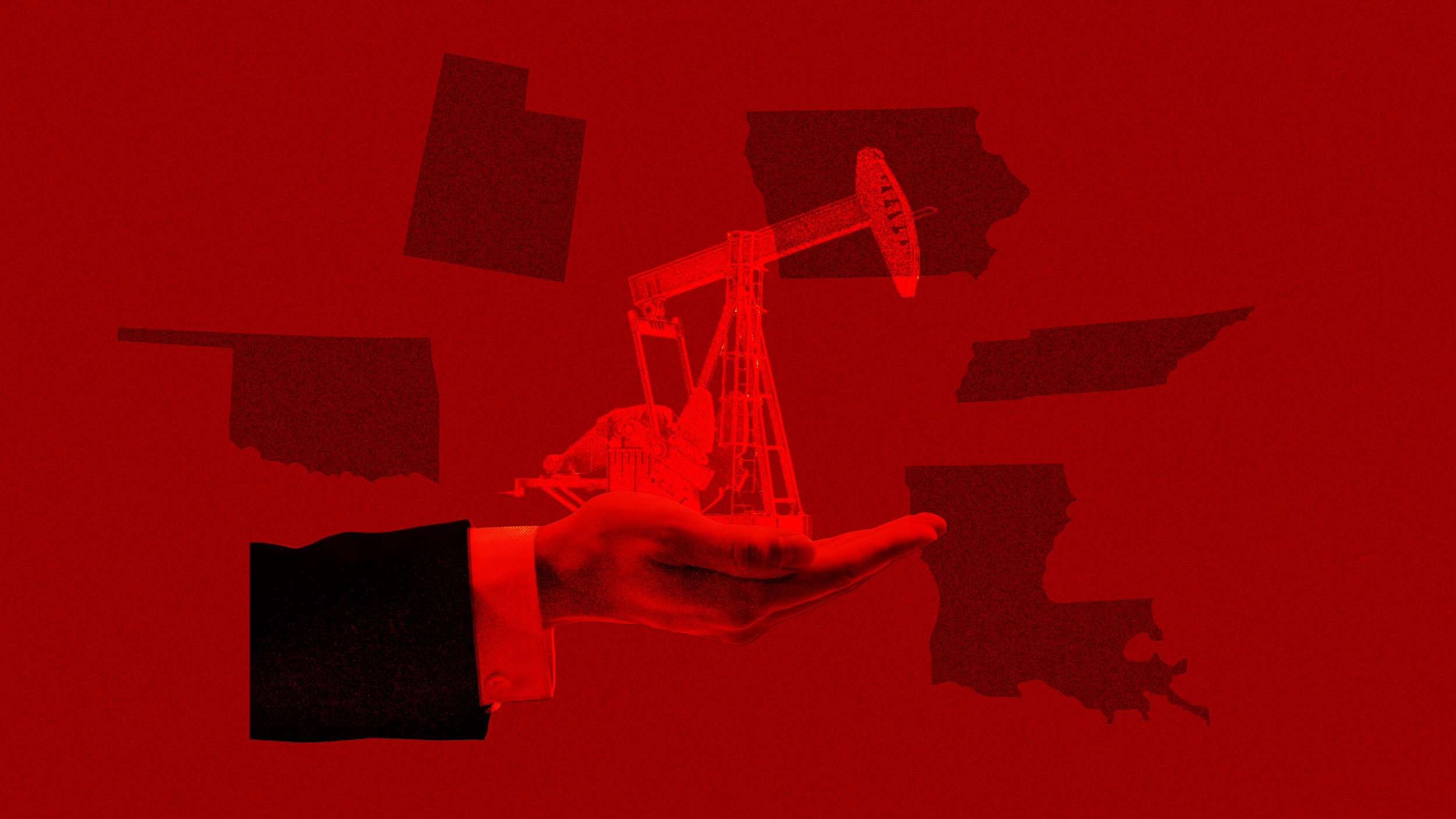
In states that were recently hit by disasters made worse by the burning of fossil fuels — from extreme heat to severe winter storms — Republican lawmakers are working to shield Big Oil companies from having to pay for the damage.
Bills in at least five Republican-controlled state legislatures would prohibit lawsuits that aim to hold fossil fuel companies and other greenhouse gas polluters liable for climate damages. The wave of legislation comes as lawsuits brought against fossil fuel companies by mostly Democratic-controlled state and local governments continue to advance through the courts.
Utah has become the first to pass a law shielding fossil fuel companies from such lawsuits, and similar bills are awaiting signatures from the governors of Tennessee, Oklahoma, and Iowa. A lawmaker in Louisiana introduced a bill in February.
Scientists agree that greenhouse gas emissions produced by the burning of fossil fuels have led to more frequent and severe weather events like wildfires, heatwaves, hurricanes, and floods. Oil companies spent decades undermining that connection.
Now, state and local officials from Maine to Hawaiʻi are arguing in court that oil companies deceived the public about the dangers they knew their products would cause, and should pay billions of dollars to help communities recover and adapt. Many states are also seeking to impose liability on oil companies for emissions-related damages through climate superfund laws, with Vermont and New York the first to pass their bills.
Sponsors of legislation that would block such actions say their bills would protect fossil fuel operations in their states, and some have openly cast doubt on climate science. Local representatives and advocates opposing the bills contend that they would allow massive corporations to operate with near-total impunity in their communities — and would restrict their ability to recover the increasingly crippling climate costs they face.
The bills appear to closely resemble model legislation published by conservative group Consumers Defense. According to a new ProPublica investigation, the bills are part of a coordinated strategy by groups linked to conservative activist Leonard Leo, including Consumers Research and Alliance for Consumers, to draft, disseminate, and pass laws shielding corporations from liability. Louisiana State Representative Brett Geymann, a Republican and the sponsor of that state’s bill, and the only bill sponsor to reply to a request to comment for this story, said he did not work with the groups on the legislation.
Oil industry lobbyists have been asking Congress to shield fossil fuel companies from both climate lawsuits and superfunds, with a group of Republican attorneys general pointing to the sweeping protections Congress gave to the gun industry as a model “liability shield.” In February, U.S. Rep. Harriet Hageman (R-WY) said she was working to draft federal legislation “as a form of preemption” of climate lawsuits and superfunds.
The state-level bills will be the first test of what oil industry immunity could look like.
Who gets to recover climate costs?
Utah Governor Spencer Cox, a Republican, last month signed the nation’s first law to declare that companies “may not be subject to any judicial remedy” for climate damages caused by greenhouse gas emissions. It makes an exception for liability only if a court finds “clear and convincing evidence” that the defendant violated an existing federal or state regulation or permit, and that any damage has or will result directly from that violation.
In addition to raising the burden of proof to show that companies violated existing statutory laws, the bills would bar claims for climate damages under state common laws, like public nuisance and negligence, which are the focus of many states and cities’ climate accountability cases.
The oil industry “made an unbelievable fortune at the expense of everyone else, and they’ve known that for 50 years,” said Dr. Brian Moench, the president of Utah Physicians for a Healthy Environment. Now, from the state’s worsening drought to its more frequent and devastating wildfires, there’s a “significant, desperate need for economic resources to try and stem this tide.”
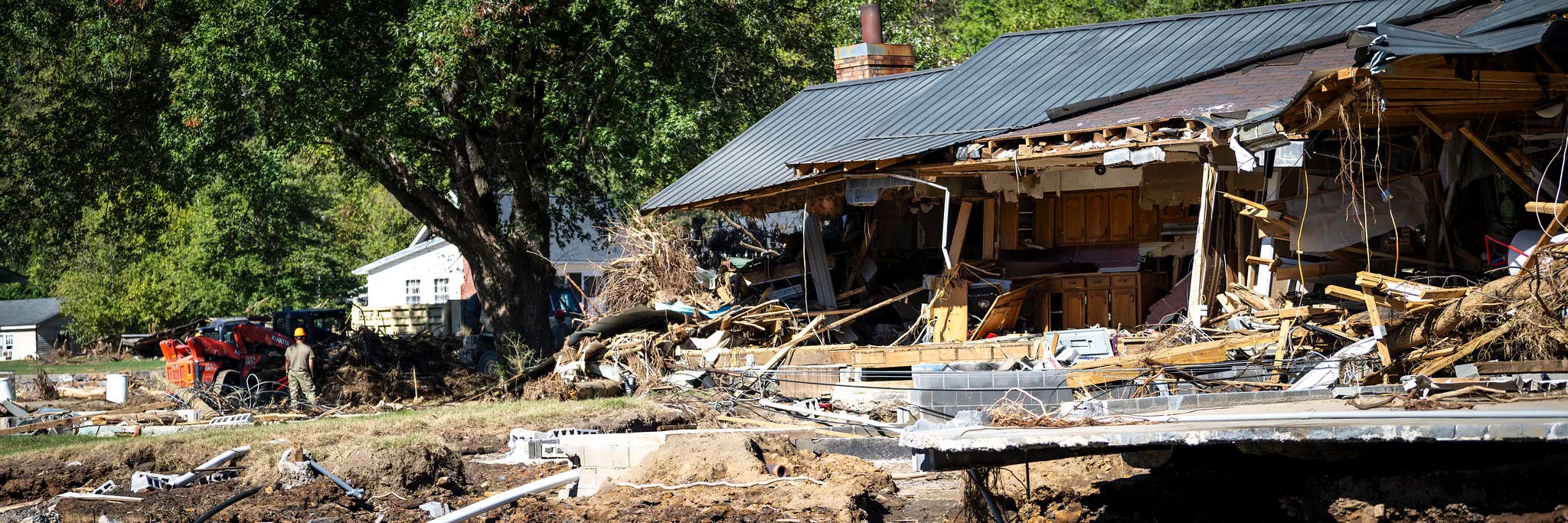
But without access to courts to recover damages, residents and local businesses will continue to be saddled with the financial burden — and some find themselves trapped in a cycle of disaster recovery. In Tennessee, still rebuilding from Hurricane Helene and other storms, Winter Storm Fern left communities without power for days in January.
“Our insurance prices are going through the roof, and we have to repair infrastructure on a regular basis,” said Pat Cupples with the Tennessee Sierra Club. He said Tennessee’s push to ban climate lawsuits could mean “an inability to help local communities, wherever they are in the state, bounce back.”
Utah State Senator Nate Blouin, a Democrat who voted against the state’s bill, said that the legislation deepens the control of fossil fuel interests over the law in states like his. Many of the same states have also worked to pass industry-backed bills preventing a transition away from and penalizing opposition to fossil fuel infrastructure.
Communities in blue and red states have long faced disparate policy landscapes that have a major impact on peoples’ lives, from gun control to reproductive and gender-affirming healthcare to moratoriums on data centers. “I think that is going to be the case with laws like this, where you see blue states and cities in blue states have the ability to hold polluters accountable, and in red states, you’re going to see them get away with everything,” Blouin told ExxonKnews.
What types of lawsuits could be blocked?
Some of the bills include language that could obstruct a much wider range of lawsuits against polluters.
Utah’s law and Iowa’s bill extend to criminal liability, and could bar climate cases brought under state criminal racketeering, antitrust, or homicide claims over climate-related deaths.
In Oklahoma, the “Energy Security and Independence Act” would ban liability claims for fraud, misrepresentation, deception, or failure to warn relating to climate change or greenhouse gas emissions. The bill would “preserve lawful access to affordable, clean, and reliable fossil fuels” — and include trade associations as well as “any product derived from” fossil fuels in its immunity shield. Taken together, those provisions could preclude lawsuits alleging deception over the marketing of plastic products, like the one brought against Exxon by the state of California.
Iowa’s bill expands the definition of a greenhouse gas as originating not just from fossil fuels, but renewable fuels and agriculture sources — indicating that ethanol producers and the agricultural industry would also be shielded.
Tennessee’s bill would go further to establish a “right to engage in activities related to coal, oil, and gas” and “prevent discrimination against the exercise of such right.” Like Oklahoma, Tennessee’s bill protects companies from being held liable for “statements or omissions” about their emissions, meaning it could prohibit consumer protection claims tied to those emissions.
“Trying to slam the courthouse doors shut”
The bills would raise the burden of proof for plaintiffs and requirements for bringing a lawsuit to begin with. Utah, Iowa, and Louisiana’s bills, for example, demand that plaintiffs must specify exactly which greenhouse gas caused the alleged harm.
Louisiana’s bill would also require plaintiffs to prove through “clear and convincing evidence” that the emissions resulting from companies’ actions caused more than 50% of the alleged climate damages.
“Louisiana is a heavily industrialized state. We have a lot of oil and gas and refining,” said Geymann, the sponsor of HB804. “You need to prove that that company is mainly the one responsible for that emission that caused the damages, instead of being able to just say, ‘I’m gonna file a claim against every single fossil fuel company in the entire state.’”
But Delta Merner, lead scientist and associate director of the climate accountability campaign at the Union of Concerned Scientists, said the bills “appear strategically crafted to exploit the gap between what attribution science can do and what these laws require.”
“By setting evidentiary requirements that exceed what the best available science can deliver, these laws are trying to slam the courthouse door shut,” she said.
Louisiana’s bill raises the bar for state or local government entities bringing a lawsuit for climate damages even higher, requiring written approval from the state governor, attorney general, and the Louisiana House and Senate committees on natural resources — all in a state government with close ties to the oil industry. It also states that plaintiffs must prove that they themselves did not “directly or indirectly” contribute to any of the emissions that caused the resulting damages.
The bill’s stated intent is “to protect energy producers and related industries from claims for emissions.” But Geymann, the sponsor, said the bill “does not provide special protection to fossil fuel companies” because it applies to any greenhouse gas emitter — for instance, he told ExxonKnews, a diesel truck driver would be protected from climate liability.
Geymann, the sponsor, insists his bill “is very narrow and only applies to claims resulting from climate change and not from emissions.” Lawsuits could still be brought for damages, including to health and property, caused by local emissions “beyond what was allowed,” he said.
But as written, the bill could be understood to mean that any lawsuits over damages caused by emissions “are not allowable in Louisiana except under the very difficult-to-meet thresholds established,” said Jackson Voss, the government and policy affairs coordinator at the Louisiana-based Alliance for Affordable Energy.
Rep. Geymann conceded that the bill would need to be revised to make that distinction clear. “I’m not an attorney, so when I first read it, I said the same thing: ‘Gosh, it looks like we’re just stopping any chance of anybody ever being able to seek damages,’ but it’s not,” Geymann said. “I will tell you, the bill has been very confusing for all of us, so I’m going to insert some additional language.”
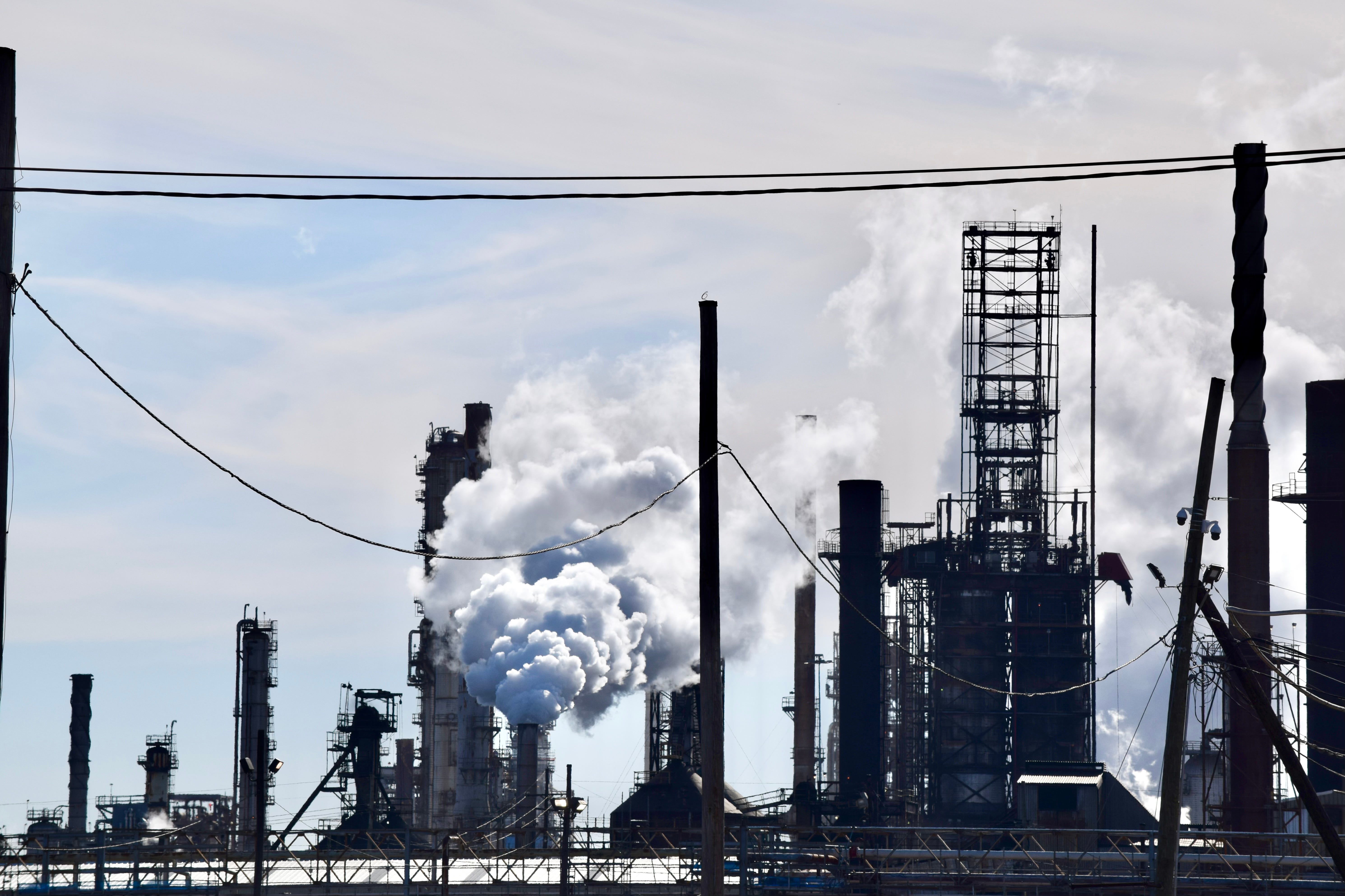
With the massive influx of chronically polluting fossil fuel and petrochemical facilities in Louisiana’s ‘Cancer Alley’ and the state’s unique vulnerability to the effects of climate change, the consequences of restricting access to the courts in the state can’t be understated, said Voss. “By passing this bill, the state government and legislature would be saying, ‘we’re siding with these companies over the ability of our citizens to actually protect themselves’,” he said.
Challenging the laws
“If more and more of these laws get passed, it will handcuff communities and society from really finding solutions” to hold industry accountable for the burdens it has passed onto the public, said Moench, of Utah Physicians for a Healthy Environment. When your legislative and judicial options are taken away from you, he asked, “what do you have left?”
Utah’s law could be challenged under the state’s constitution, said Andrew Welle of Our Children’s Trust, the lead counsel on a climate lawsuit brought by youth plaintiffs in Utah against the state government. Like many other states across the country, Utah’s constitution has an Open Courts Clause, which would ensure public access to the courts to redress injury or harm. “I think that this legislation may very well cross the line,” Welle said.