
The Trump administration comes to Big Oil’s rescue in Minnesota
The DOJ is taking “unprecedented” measures to fight the fossil fuel industry’s legal battles.
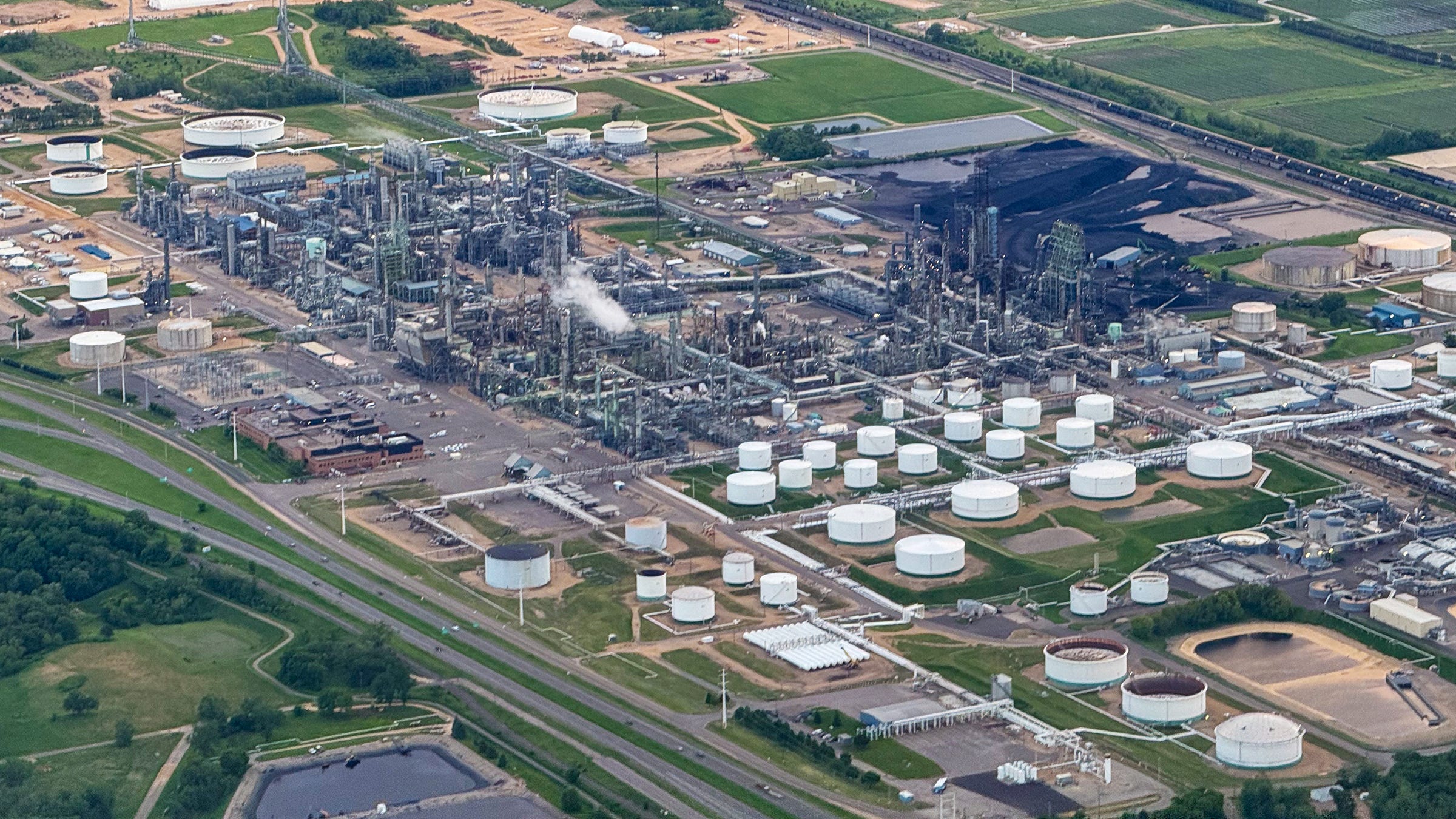
The Trump administration is suing the state of Minnesota to try to stop its consumer fraud lawsuit against ExxonMobil, the American Petroleum Institute, and Koch Industries, before it can reach trial. It’s the administration’s latest effort to shield the fossil fuel industry from climate accountability cases that could cost oil companies billions of dollars, make them change their marketing practices, and expose internal documents that could alter their public image forever.
Minnesota is one of a growing number of state and local governments to bring lawsuits against major oil companies and their trade associations, arguing that they should be held accountable for deceiving the public about the dangers of burning oil and gas. In 2020, Minnesota Attorney General Keith Ellison sued the largest U.S. oil company, largest U.S. trade association, and largest oil refiner in the state.
Exxon, API, and Koch have fought to dismiss Minnesota’s case, including claims that the lawsuit violated their free speech rights, but were rejected by lower courts. Last month, Minnesota’s Supreme Court declined to hear the industry’s appeal, sending the case to discovery, which is the pre-trial period during which both parties can seek additional evidence to make their case.
With traditional legal efforts by the oil companies having failed, the Justice Department yesterday brought its own lawsuit against the state and Ellison to stop the case. The DOJ’s filing argues that Minnesota’s consumer fraud lawsuit attempts to regulate greenhouse gas emissions and is preempted under federal law including the Clean Air Act and “our constitutional structure,” and claims the case threatens Trump’s energy and foreign policy agendas.
“President Trump promised to unleash American energy dominance, and Minnesota officials cannot undermine his directive by mandating that their woke climate preferences become the uniform policy of our nation,” said Associate U.S. Attorney General Stanley Woodward in a press release accompanying the lawsuit.
Trump has worked faithfully to promote and protect the fossil fuel interests to whom he promised political favors in exchange for campaign donations two years ago. After ordering the Department of Justice to “take all appropriate action to stop” state climate lawsuits and superfund laws from moving forward, the DOJ preemptively sued state officials in Hawaiʻi and Michigan to stop them from bringing climate lawsuits. The states brought their lawsuits against oil companies anyway, and federal courts dismissed the DOJ’s cases.
The DOJ also sued New York and Vermont over their climate superfund laws, and those cases are pending.
Still, the Trump DOJ “just can’t stop overreaching,” said Robert Percival, a law professor and director of the Environmental Law Program at the University of Maryland School of Law. “They’ll try anything.”
The administration also submitted an uninvited brief in support of a petition to the U.S. Supreme Court by oil companies to throw out another climate accountability lawsuit brought by Boulder, Colorado on similar federal preemption grounds. The Justices — including Samuel Alito, who owns thousands of dollars in oil company stocks and has previously recused himself from hearing select cases against the industry — granted that petition, with arguments anticipated this fall.
Minnesota’s lawsuit is part of the state’s history of holding corporations accountable under its consumer protection law, the Minnesota Prevention of Consumer Fraud Act. Nearly 28 years ago, Minnesota won a $6.5 billion settlement from major tobacco companies after a months-long trial during which the state argued the companies misled consumers about their products and even targeted children with their marketing.
The state’s consumer fraud lawsuit against Exxon, Koch, and API also argues that those three industry titans targeted consumers with a “campaign of deception” about the economic and public health consequences they knew would result from climate change caused by burning fossil fuels. The lawsuit seeks to make them cease any deceptive conduct and disgorge profits they made while deceiving the public, disclose all of their climate research, pay “maximum civil penalties” for violating state laws, and fund a public education campaign about climate change, among other remedies.
Exxon and the Koch network have spent hundreds of millions of dollars funding climate denying political operatives and groups including the Heartland Institute, which along with API targeted U.S. classrooms with oil industry propaganda. Exxon and the Charles Koch Foundation also funded the Law and Economics Center at George Mason University, which is now hosting a symposium to encourage “healthy skepticism” of climate science among judges, a new ProPublica investigation found.
Joelle Lester, executive director at the Public Health Law Center at the Mitchell Hamline School of Law in Minnesota and an expert in tobacco control law, said that Minnesota’s lawsuit against tobacco companies was crucial in forcing the companies to disclose evidence of their disinformation campaigns. The case was “transformative for public opinion and also for the belief that Congress needed to do more to regulate tobacco products, and the documents archive remains incredibly important to understanding the behavior of the tobacco industry and the scale of deception,” Lester said.
“There’s a lot of similarities” between Minnesota’s tobacco lawsuit and its lawsuit against Big Oil, Lester said. But the DOJ’s actions to shield fossil fuel interests have been “unprecedented,” she said.
“The federal government did not behave this way around tobacco [litigation], and that is probably in part because in the past, the government has been an important player in protecting health,” she said, pointing to the DOJ’s federal racketeering lawsuit against major tobacco companies that in 2006 forced the companies to correct their disinformation. “In this case, [protecting] the industry interest seems to be the only priority.”
Last month, members of Congress who have received millions of dollars in campaign donations from the fossil fuel industry introduced a bill that would ban all state climate laws and lawsuits nationwide. Similar state bills have already passed into law in Utah, Tennessee, Iowa, and Oklahoma as part of a coordinated effort by groups tied to conservative activist Leonard Leo.
The Trump administration is also encountering fierce criticism from some in the MAHA movement for supporting legal immunity for Monsanto, which faces lawsuits alleging the corporation failed to warn consumers of the links between the weedkiller glyphosate and cancer.
In a statement Monday, Minnesota attorney general Ellison said he would work to get the DOJ’s case dismissed. “The American people deserve a Department of Justice that fights for us, and it’s a tremendous shame that Trump’s DOJ would rather sell us out to Big Oil,” he said.
Minnesota is trying to hold this oil company responsible for all the damage it does and for its false advertising. Now Trump wants to use the department of justice to stop this lawsuit in favoritism to the oil company. More pollution for us, more money for the wealthy oil companies.
Is that what these people voted for? I don’t think so.